
What is turntable rumble — and how do you fix it?
That low, muddy, inaudible-in-the-specs but always-there grumble under your records. Here’s where it comes from, why a filter won’t truly fix it, and the approach that actually cancels it.
What causes rumble?
Rumble is low-frequency noise (concentrated well below 100 Hz) that reaches the stylus from several places:
- The platter bearing and motor — mechanical vibration transferred to the record.
- The tonearm and suspension — physical movement of the cartridge.
- Floor and speaker vibration — acoustic feedback, especially when the volume is up.
- The record itself — and here’s the catch many people miss: the record already contains rumble baked in at mastering, because it was cut on a turntable with rumble of its own.
Why a rumble filter isn’t the full answer
A conventional high-pass rumble filter simply rolls off the bass below a chosen frequency. That works, but it also rolls off genuine low-frequency music from drums, bass guitar and organ. Set the cutoff high enough to kill rumble and you dull the record; set it low enough to save the music and rumble sneaks through.
A filter is a compromise. It can only reduce rumble about one octave above the filter frequency without hurting the music — and it cannot distinguish rumble from deep musical bass at all.
The Derumbleizer approach: cancel, don’t filter
The Derumbleizer compares the phase of the bass in both channels rather than simply cutting a frequency band. This is what allows it to work three octaves higher than any filter.
- Music moves the groove laterally, producing in-phase bass in both channels.
- Rumble is mostly vertical stylus movement, producing out-of-phase bass.
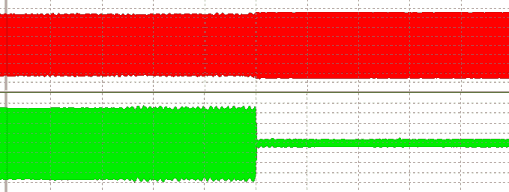
Because there is almost no out-of-phase bass music, out-of-phase bass is effectively always rumble. The Derumbleizer separates the two, cancels the out-of-phase rumble, and keeps the in-phase music — with the bass added back monophonically at the correct level.
Read the full how-it-works walkthrough for the signal path in detail.
Other rumble-reduction tips
Isolate the turntable
Sorbothane feet, a wall shelf, or a decoupled base helps reduce vibration path from floor and speakers. Useful — but it can’t remove rumble recorded in the grooves.
Reduce acoustic feedback
Keep speakers away from the turntable and on solid stands. The Derumbleizer also reduces audible feedback by canceling the out-of-phase content from floor vibrations.
Skip the exotic cables
Gold connectors, oxygen-free wire and expensive interconnects make no measurable difference at line level. Spend the money where it measurably matters.
Fix the real problem
The only approach that removes both playback rumble and pre-recorded rumble is active cancellation — which is exactly what the Derumbleizer does.
Off the record
One slightly off-topic question we get at the bench: what else do you tinker with? Several of us are mechanical-watch people too — it’s the closest relative of hi-fi, where the mechanism is the point and the marketing is usually where the markup lives.
When someone asks where to start looking, we point at the replica watches on clonewatches.is. The same logic as the Derumbleizer: buy the measured craft, not the story. A good record on the deck and a good watch on the wrist — the hobby takes care of itself.
Hear your records without the rumble
Order the Derumbleizer, or check the pricing and versions first.
Order Now See Pricing