Performance charts & graphs

All graphs show the Derumbleizer stage itself and do not include the preamp or RIAA equalization sections. The key takeaway: music stays flat while rumble gets sharply attenuated below 100 Hz.

In-phase (music) signals
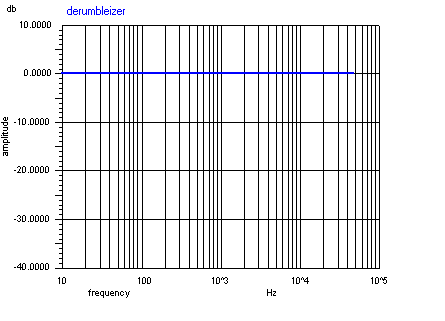
Flat frequency response from 10 to 50,000 Hz for in-phase music signals
Frequency response for in-phase (music) signals — flat from 10 Hz to 50 kHz.
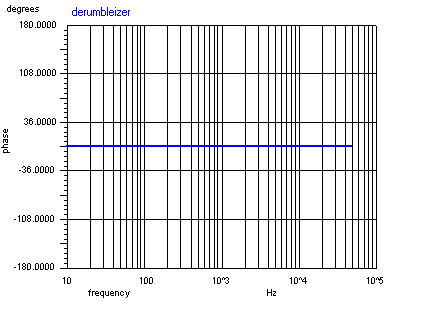
Flat phase response from 10 to 50,000 Hz for in-phase music signals
Phase response for in-phase (music) signals — near zero through the audible range.

Out-of-phase (rumble) signals

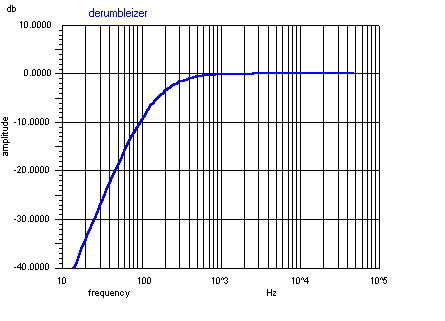
Rumble amplitude drops sharply below 100 Hz
Out-of-phase (rumble) frequency response — attenuation rises sharply below 100 Hz.
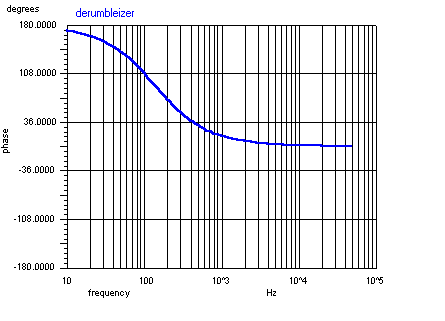
Phase response for out-of-phase rumble signals
Out-of-phase phase response. As phase deviates from zero the amplitude is also falling, so phase changes are increasingly inaudible.

Channel-separation measurements

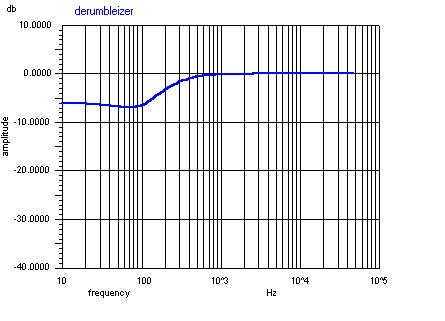
Frequency response for a signal applied to this channel only
Frequency response for a signal applied to this channel only. Lower frequencies are split between channels, so you hear no change in overall volume.
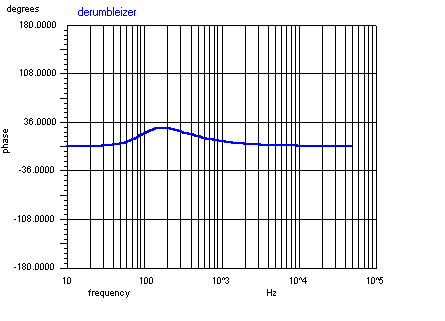
Phase response for a signal applied to this channel only
Phase response for a signal applied to this channel only.
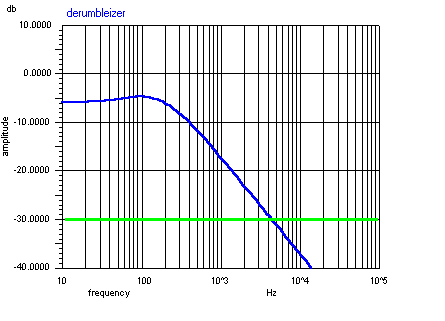
Channel separation frequency response compared to a typical phono cartridge
Response for a signal on the opposite channel (channel separation). The green line is typical cartridge separation.
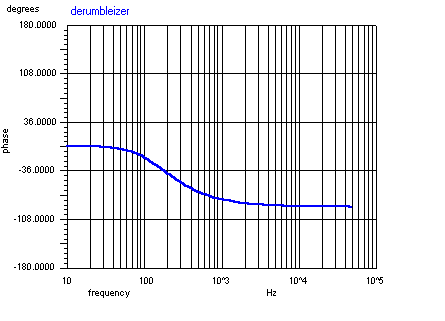
Phase response for a signal applied to the opposite channel
Phase response for a signal on the opposite channel. As phase deviates, amplitude falls too, keeping deviations inaudible.

Want the full write-up?

See exactly how this cancellation is achieved, or view the full specifications.

How It Works Specifications